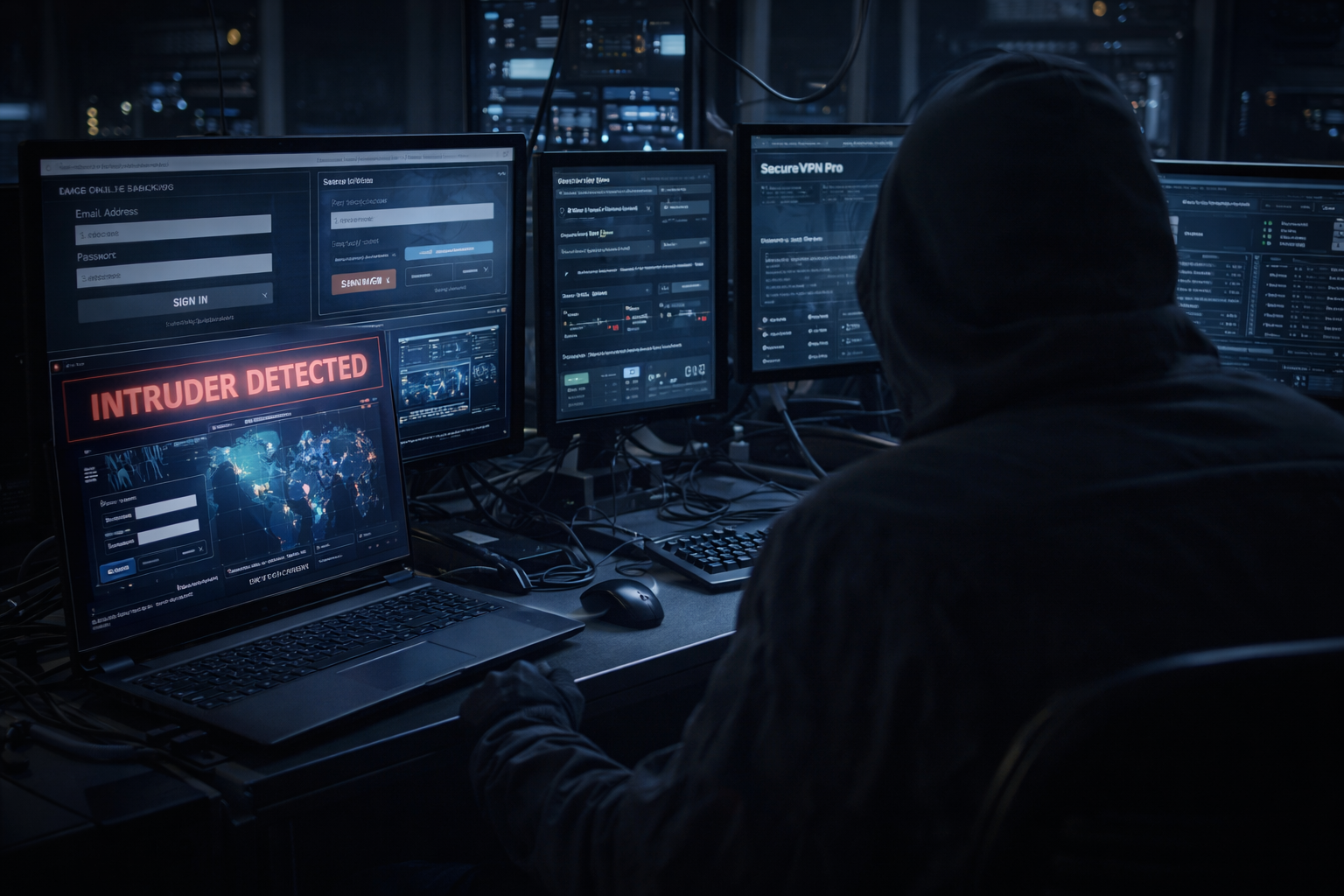
Most security programs are built around reacting to events.
This layer is built around provoking interaction.
Caspipot deploys controlled, isolated deceptive environments designed to attract reconnaissance, credential testing, and probing behavior — long before production systems are reached.
Understanding attackers before they reach your systems
real adversary behavior
The Adversary Engagement Layer introduces controlled environments designed to attract this early activity. Instead of discovering real infrastructure, attackers encounter believable services that encourage interaction while remaining completely isolated from production systems.
Every interaction reveals intent. Credential attempts, scanning patterns, navigation behavior, and tooling fingerprints become structured signals that security teams can analyze.
01
Controlled Exposure
Deploys believable external assets that attract reconnaissance without exposing real infrastructure.
02
Behavioral Capture
Records attacker interactions such as credential attempts, tool fingerprints, and navigation behavior.
03
Intelligence Extraction
Analyzes repeated IPs, credential reuse, and scanning activity to generate structured adversary intelligence.
04
Pattern Analysis
Correlates attacker behavior across environments to reveal targeting patterns and infrastructure reuse.
From interaction to adversary insight
attacker decision patterns
Every interaction with a deceptive environment reveals a small piece of attacker behavior. When these signals are analyzed together they begin to form a clearer picture of how adversaries operate.
Caspipot correlates credential activity, scanning sequences, infrastructure reuse, and navigation behavior across multiple controlled environments. This allows security teams to move beyond isolated events and understand the decision patterns behind an attack.
Over time these patterns expose the tools attackers rely on, the infrastructure they reuse, and the techniques they consistently test during early targeting stages.
Instead of reacting to incidents, organizations gain insight into how adversaries approach their environment long before real systems are involved.